Vocabulário em inglês sobre clima e tempo: palavras e frases para o dia a dia
Falar sobre clima e tempo em inglês é muito útil no dia a dia. Esse assunto aparece em conversas informais, viagens, rotina, planejamento de atividades e até no começo de pequenas interações sociais. Em inglês, comentar o clima é uma forma muito comum de iniciar uma conversa de forma natural.
Neste post, você vai aprender vocabulário em inglês sobre clima e tempo com palavras essenciais, expressões frequentes, frases práticas e exercícios simples para fixar o conteúdo.
Palavras básicas sobre clima e tempo em inglês
Antes de falar sobre sol, chuva ou frio, vale conhecer algumas palavras centrais desse tema.
- weather — tempo / clima
- climate — clima
- forecast — previsão do tempo
- temperature — temperatura
- degree — grau
- sky — céu
- air — ar
- season — estação
- humidity — umidade
- heat — calor
- sunlight — luz do sol
- sunshine — sol / luz do sol
- rain — chuva
- wind — vento
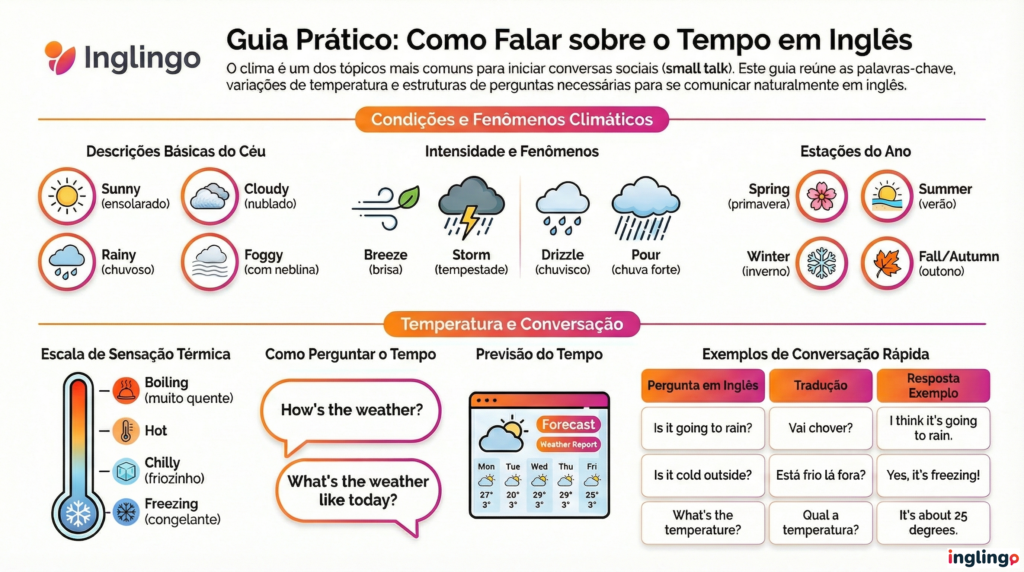
- storm — tempestade
- cloud — nuvem
- sun — sol
- shade — sombra
- atmosphere — atmosfera
- weather report — boletim do tempo
Condições climáticas mais comuns
Agora vamos para as palavras mais usadas para descrever o clima.
- sunny — ensolarado
- cloudy — nublado
- rainy — chuvoso
- windy — ventando / ventoso
- stormy — tempestuoso
- foggy — com neblina
- snowy — nevando / com neve
- hot — quente
- warm — morno / quente agradável
- cool — fresco
- cold — frio
- freezing — congelante / muito frio
- dry — seco
- humid — úmido
- wet — molhado
- clear — limpo / céu aberto
- bright — claro / com bastante luz
- mild — ameno
- chilly — friozinho
- harsh — severo / rigoroso
Exemplos:
- It’s sunny today. — Está ensolarado hoje.
- The weather is cloudy this morning. — O tempo está nublado esta manhã.
- It’s very humid here. — Está muito úmido aqui.
- The night is cold and windy. — A noite está fria e ventando.
Elementos da natureza relacionados ao clima
Essas palavras ajudam a ampliar o vocabulário do cenário.
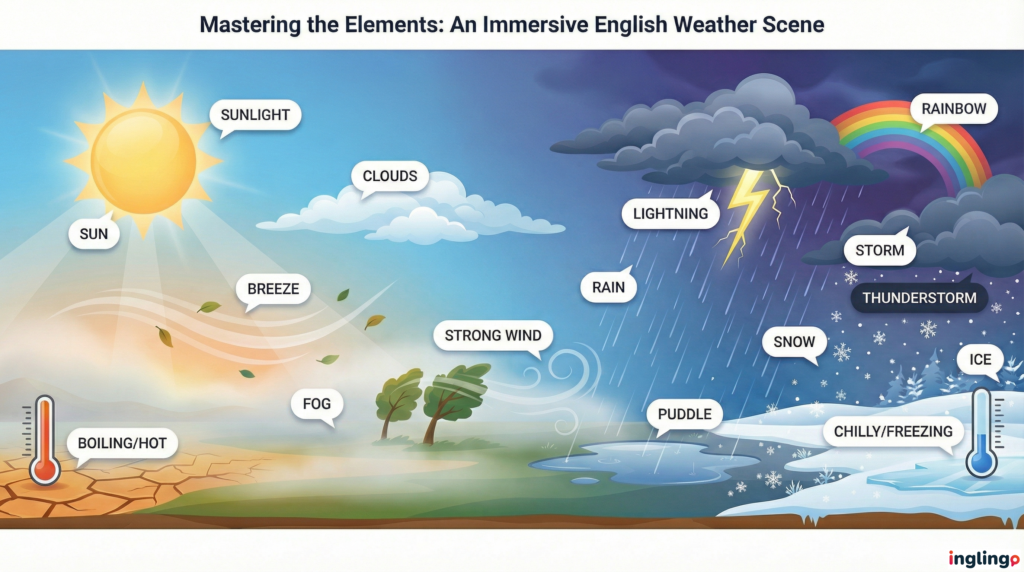
- sun — sol
- cloud — nuvem
- rain — chuva
- raindrop — gota de chuva
- wind — vento
- breeze — brisa
- snow — neve
- ice — gelo
- fog — neblina
- mist — névoa
- thunder — trovão
- lightning — relâmpago
- rainbow — arco-íris
- storm — tempestade
- hurricane — furacão
- tornado — tornado
- puddle — poça
- sunset — pôr do sol
- sunrise — nascer do sol
- thunderstorm — tempestade com trovões
Temperatura e sensação térmica
Além de falar do clima, também é importante saber descrever a temperatura e a sensação do momento.
- temperature — temperatura
- degree — grau
- Celsius — Celsius
- hot — quente
- very hot — muito quente
- warm — quente agradável
- mild — ameno
- cool — fresco
- cold — frio
- freezing — congelante
- boiling — muito quente
- chilly — friozinho
- low temperature — temperatura baixa
- high temperature — temperatura alta
- it feels hot — parece quente
- it feels cold — parece frio
Exemplos:
- It’s very hot today. — Está muito quente hoje.
- The temperature is low this morning. — A temperatura está baixa esta manhã.
- It feels colder at night. — Parece mais frio à noite.
- Today is warm and pleasant. — Hoje está quente de forma agradável.
Estações do ano e clima típico
As estações também ajudam a organizar o vocabulário sobre clima e tempo.
- spring — primavera
- summer — verão
- fall — outono
- autumn — outono
- winter — inverno
- rainy season — estação chuvosa
- dry season — estação seca
Exemplos:
- Summer is very hot here. — O verão é muito quente aqui.
- Winter is cold and dry. — O inverno é frio e seco.
- It rains a lot in spring. — Chove muito na primavera.
- Fall is usually cool and windy. — O outono geralmente é fresco e ventoso.
Verbos e expressões comuns sobre clima
Essas palavras ajudam você a sair da lista de vocabulário e usar o inglês em frases reais.
- rain — chover
- snow — nevar
- shine — brilhar
- blow — soprar
- freeze — congelar
- melt — derreter
- clear up — abrir o tempo
- get dark — escurecer
- cool down — esfriar
- warm up — esquentar
- pour — cair forte (chuva)
- drizzle — chuviscar
Expressões comuns:
- It’s raining. — Está chovendo.
- It’s snowing. — Está nevando.
- The sun is shining. — O sol está brilhando.
- The wind is blowing hard. — O vento está soprando forte.
- The weather is changing. — O tempo está mudando.
- It might rain later. — Pode chover mais tarde.
- The sky is clearing up. — O céu está abrindo.
Complemente seus estudos com:
Perguntas comuns sobre clima e tempo em inglês
Essas perguntas aparecem muito em conversas casuais e situações do cotidiano.
- How’s the weather? — Como está o tempo?
- What’s the weather like today? — Como está o tempo hoje?
- Is it cold outside? — Está frio lá fora?
- Is it going to rain? — Vai chover?
- What’s the temperature? — Qual é a temperatura?
- Do you like hot weather? — Você gosta de clima quente?
- Is it sunny today? — Está ensolarado hoje?
- Will it be windy tomorrow? — Vai ventar amanhã?
Respostas úteis:
- It’s sunny and warm. — Está ensolarado e agradável.
- It’s cloudy today. — Está nublado hoje.
- Yes, it’s very cold outside. — Sim, está muito frio lá fora.
- I think it’s going to rain. — Acho que vai chover.
- It’s about 25 degrees. — Está em torno de 25 graus.
- No, it’s not sunny today. — Não, hoje não está ensolarado.
Frases de exemplo com clima e tempo em inglês
Veja agora algumas frases práticas para memorizar o tema com mais naturalidade.
- The weather is beautiful today. — O tempo está bonito hoje.
- It’s very hot this afternoon. — Está muito quente esta tarde.
- I need a jacket because it’s cold outside. — Eu preciso de uma jaqueta porque está frio lá fora.
- The sky is full of dark clouds. — O céu está cheio de nuvens escuras.
- It might rain in the evening. — Pode chover à noite.
- We should take an umbrella. — Nós deveríamos levar um guarda-chuva.
- The wind is strong today. — O vento está forte hoje.
- It’s a perfect day for the beach. — É um dia perfeito para a praia.
- The morning is cool and pleasant. — A manhã está fresca e agradável.
- It was foggy early in the morning. — Estava com neblina bem cedo de manhã.
- I love sunny days. — Eu adoro dias ensolarados.
- She doesn’t like cold weather. — Ela não gosta de clima frio.
- The forecast says it will rain tomorrow. — A previsão diz que vai chover amanhã.
- It usually gets colder at night. — Geralmente fica mais frio à noite.
- We stayed home because of the storm. — Nós ficamos em casa por causa da tempestade.
Como usar esse vocabulário no dia a dia
Uma forma prática de usar esse conteúdo é comentar o clima em inglês todos os dias. Pode ser algo simples:
- It’s hot today.
- It’s cloudy this morning.
- I think it’s going to rain.
- The weather is nice today.
- It’s too cold outside.
Outra forma eficiente é relacionar o clima com decisões do cotidiano:
- I need an umbrella.
- I’m wearing a coat today.
- Let’s stay inside.
- It’s a good day for a walk.
Exercícios práticos
Exercício 1: complete as frases
Complete em inglês.
- Today is very ______.
- I need a jacket because it’s ______.
- The sky is ______.
- It might ______ later.
- The wind is very ______ today.
Exercício 2: traduza para o inglês
- Está muito quente hoje.
- O céu está nublado.
- Vai chover mais tarde.
- Eu gosto de tempo frio.
- O vento está soprando forte.
Exercício 3: responda em inglês
- What’s the weather like today?
- Do you like hot or cold weather?
- Is it rainy in your city?
- What do you wear on cold days?
- Do you prefer sunny or cloudy days?
Gabarito sugerido
Exercício 1
- hot / sunny / warm
- cold
- cloudy / clear
- rain
- strong
Exercício 2
- It’s very hot today.
- The sky is cloudy.
- It’s going to rain later.
- I like cold weather.
- The wind is blowing hard.
Exercício 3
As respostas são pessoais. Exemplos:
- It’s sunny and warm today.
- I like cold weather.
- Yes, it is rainy in my city.
- I wear a coat on cold days.
- I prefer sunny days.
Perguntas frequentes sobre clima e tempo em inglês
Como perguntar “Como está o tempo?” em inglês?
A forma mais comum é: What’s the weather like?
Também é muito usado: How’s the weather?
Como dizer “está chovendo” em inglês?
Você pode dizer: It’s raining.
Como dizer “está muito quente” em inglês?
Você pode dizer: It’s very hot.
Como dizer “nublado” em inglês?
A palavra é cloudy.
Como falar “previsão do tempo” em inglês?
Você pode usar weather forecast ou apenas forecast.
Conclusão
Aprender vocabulário em inglês sobre clima e tempo ajuda muito na comunicação real. Esse tema aparece em conversas casuais, viagens, notícias, rotina e planejamento do dia. Com as palavras e frases deste post, você já consegue entender melhor esse assunto e também falar sobre ele com mais naturalidade.
Uma boa prática é descrever o clima da sua cidade em inglês todos os dias. Isso ajuda a transformar vocabulário em uso real, que é o que realmente faz diferença no aprendizado.
Quer aprender mais:
- Listening para Iniciantes: Como Treinar o Ouvido em Inglês
- Como Memorizar Vocabulário em Inglês Sem Decorar de Forma Cansativa
Acesse também: Matriz de conteúdo completa